
Active development — clinical validation underway

Breast imaging that measures metabolic activity, without radiation

MamoRef is an optical mammography system that uses near-infrared light to help classify breast lesions. It is the flagship development of BIONiRS: a public-science project born in a CONICET and UNICEN research group.
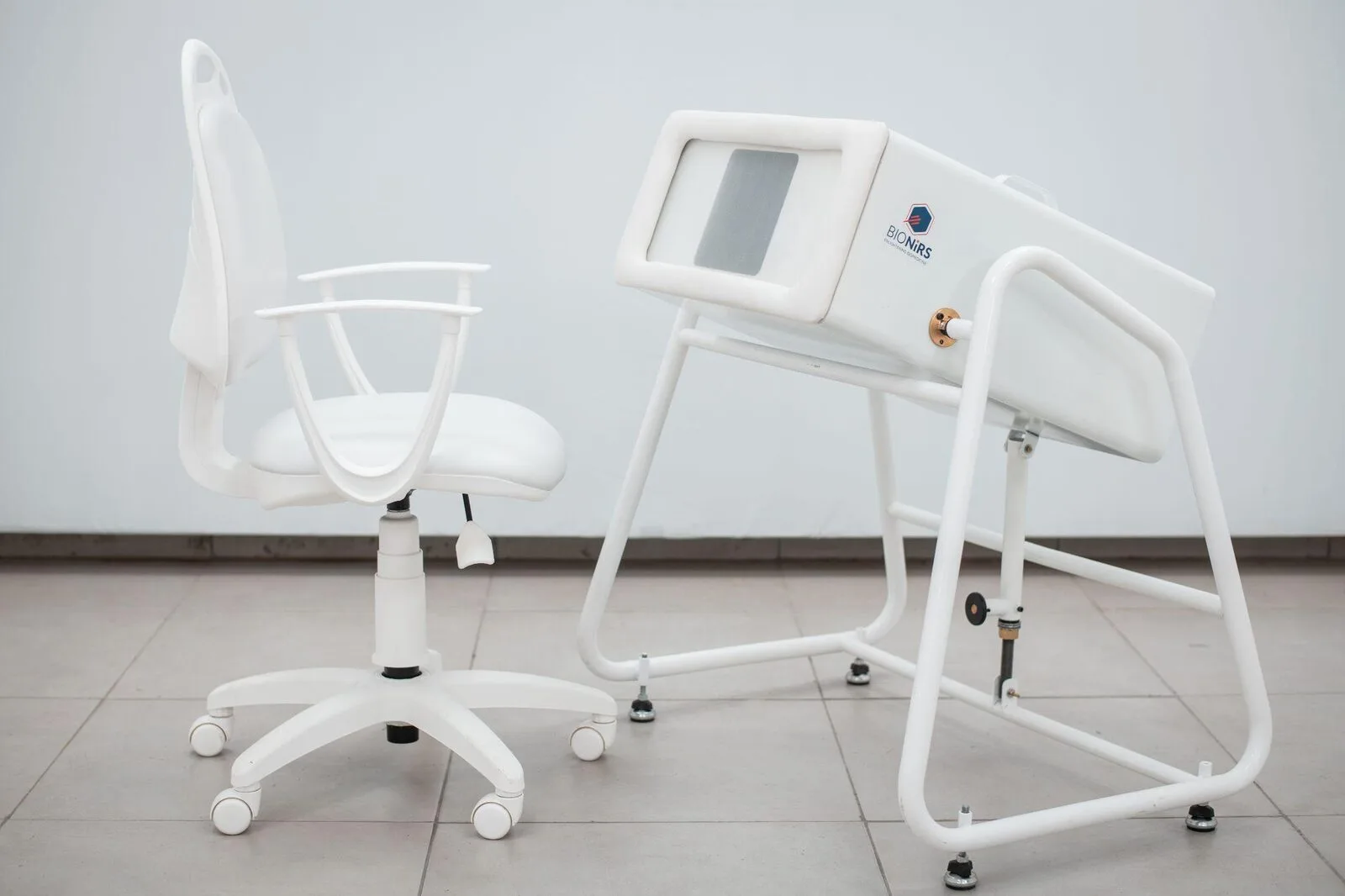
MamoRef clinical prototype next to the patient positioning chair
MamoRef's second clinical prototype, in use during hospital studies
TRL 6technology readiness level
0.77AUC in the prospective study
2peer-reviewed papers
3partner hospitals & institutes
The problem

Standard mammography still leaves questions unanswered

Gold-standard breast cancer detection techniques are indispensable, but they have well-known limitations that affect both patients and the health system.

70–80%

of biopsies ordered after a suspicious finding come back negative for cancer.

30%

is the additional metabolic information that can help tell healthy from cancerous tissue apart — information structural imaging alone doesn't provide.

↑

High costs and late diagnoses, worsened in dense breasts and in settings with limited access to equipment.

Our response

MamoRef: whole-field continuous-wave diffuse reflectance

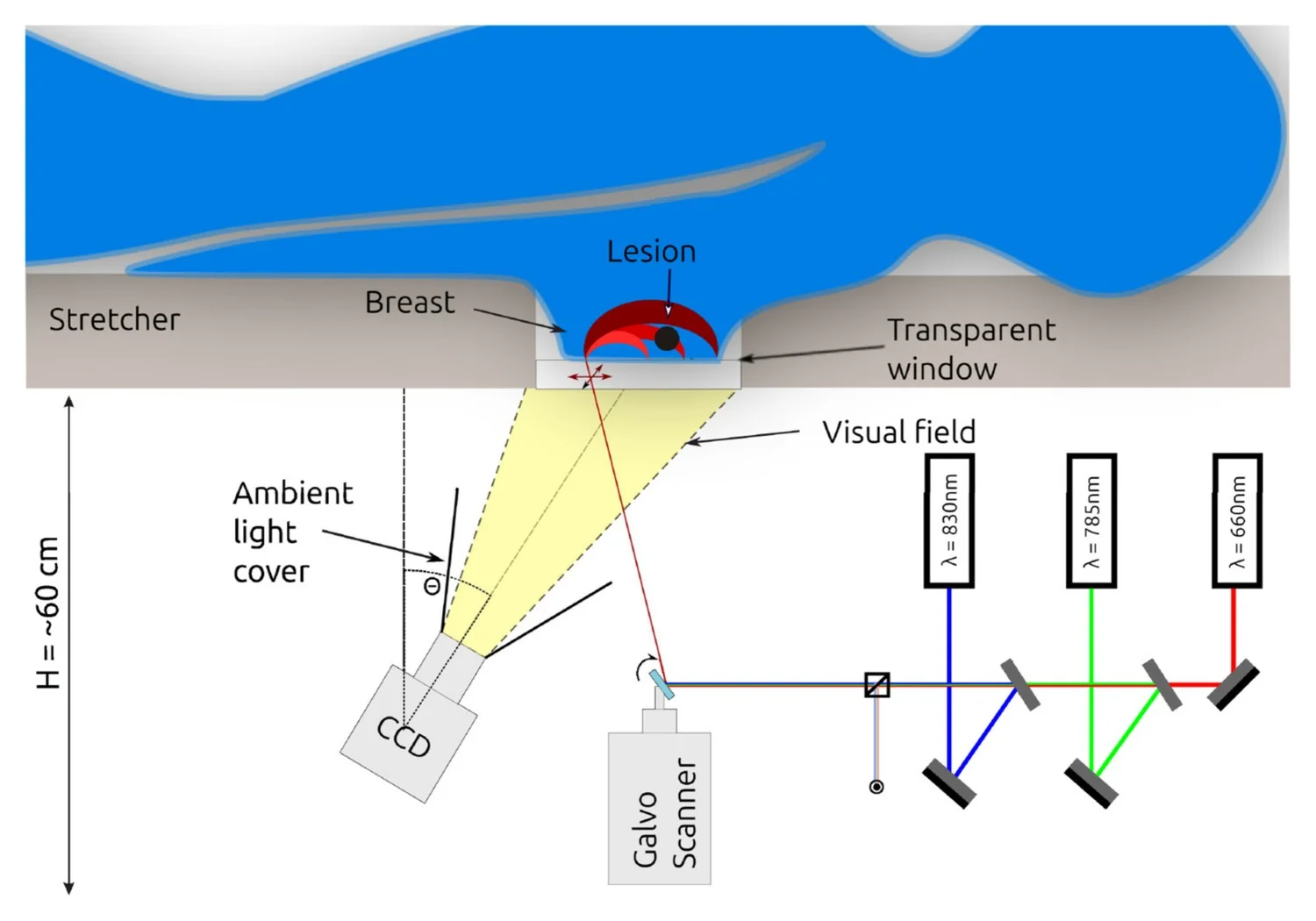
MamoRef is an optical mammography imaging system for breast cancer detection and follow-up. It uses low-power, non-ionizing lasers and whole-field continuous-wave diffuse reflectance to generate maps of oxygenated and deoxygenated hemoglobin concentration, estimating the metabolic activity of breast lesions.

The goal is to classify lesion malignancy, enable continuous follow-up of women under observation or treatment, and reduce the need for unnecessary biopsies — complementing, not replacing, standard imaging techniques.

MamoRef device schematic published in the 2026 paper: three lasers combined into one beam directed by a galvo-scanner, with a CCD camera capturing the breast's diffuse reflectance

The patient rests her breast on a transparent window, with no mechanical compression. Device schematic — Figure 2, Carbone et al. 2026.

Advantages

Built to adapt to different clinical settings

Comfortable for patients

No mechanical compression: the breast rests freely on the optical window.

No ionizing radiation

Uses low-power near-infrared laser light, harmless for patients of any age.

Autonomous & portable

No shielded room or dedicated infrastructure required: it can be brought to the patient.

Results on the spot

Metabolic images are generated during the same visit.

Accessible & affordable

Designed to cut costs relative to gold-standard techniques, widening access to diagnosis.

Functional information

Adds metabolic data to standard imaging, with full-breast coverage.

Where we stand

Current state of development

MamoRef advances in stages, with results published and peer-reviewed at every step.

Completed

  • Two clinical prototype versions — TRL 6
  • Two published clinical studies: 42 measurements (2024) and 21 patients with an AUC of 0.77 (2026)
  • US patent granted (2024) and a second international application pending
  • 2 peer-reviewed papers published
Who we are

Public science, built to reach the clinic

BIONiRS grew out of the Biomedical Optics Group at CIFICEN (CONICET – UNICEN), in Tandil, Argentina, as the vehicle to turn years of near-infrared spectroscopy research into a real clinical device. MamoRef is that development: built, validated, and published together with hospitals and health centers.

Grupo de Óptica Biomédica (GOB — Biomedical Optics Group) CONICET and Universidad Nacional del Centro de la Provincia de Buenos Aires (UNICEN) IFAS — Instituto de Física Arroyo Seco
Hospital Privado de la Comunidad — Mar del Plata Hospital Británico INTECNUS
Social

Follow us

Updates from the lab, the team, and MamoRef's development, on the other side of the screen — including our YouTube channel.